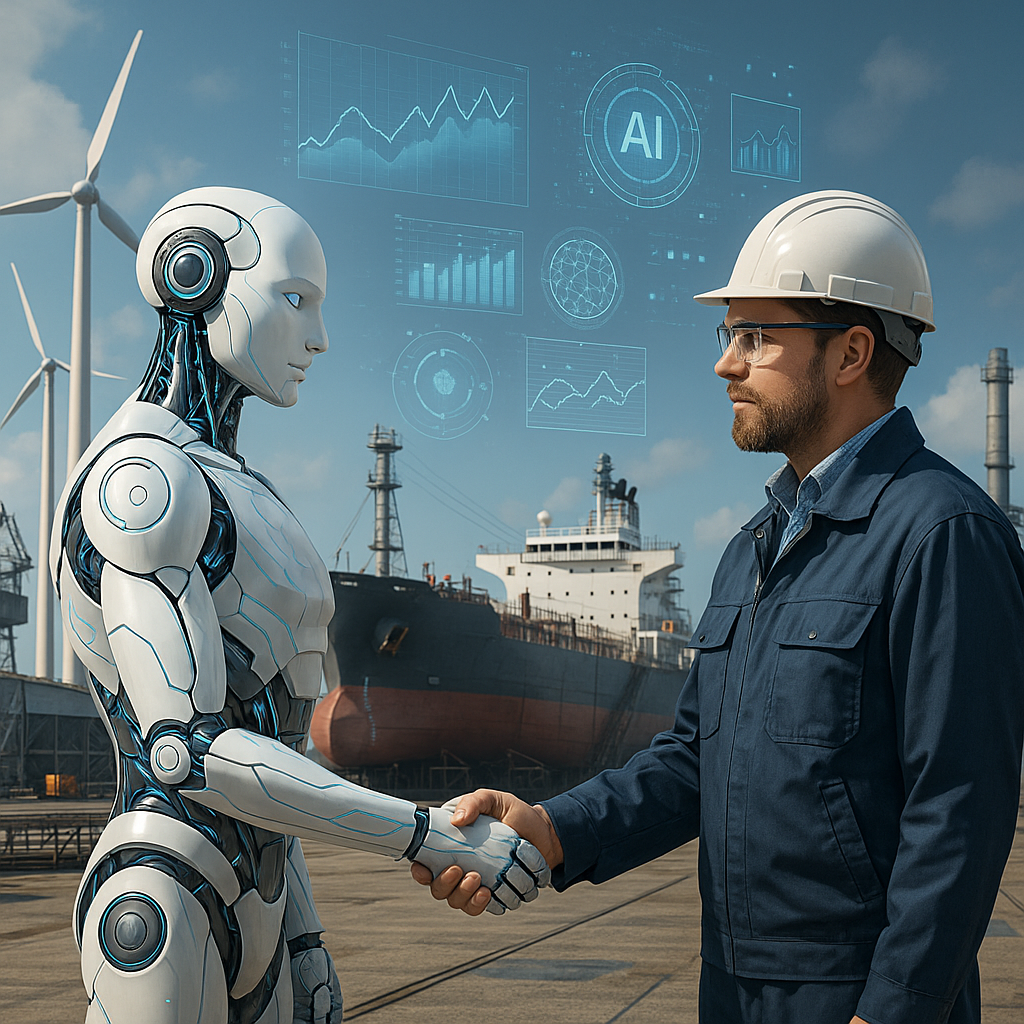
We are witnessing unprecedented growth in the field of machine learning, AI, and data science. Predictive algorithms and advanced optimization techniques are now used in nearly all industries, from healthcare and advanced manufacturing to shipping, automotive, and even energy.
However, in the midst of all the change one aspect remains constantly overlooked, and that is the domain knowledge.
Why is domain expertise critical?
Understanding the data is one thing, but speaking the language is another.
A machine learning model can be perfectly designed from a technical point of view. However, if the model neglects the important elements of marine engine physics, a power plant’s load curves, nuclear regulatory constraints, energy spot market dynamics, and energy spot market,
… the model in question is bound to provide erroneous recommendations, which could be tremendously damaging in both financial and operational aspects.
Business insiders are the only ones who deeply understand what really matters.
Insiders know that the focus is not always related to energy costs; sometimes it could be about asset lifetime optimization, or NOx emissions minimization in highly regulated port areas. There are many factors which only a contract specialist can answer concerning penalties and regulatory ecosystems.
Field experience is critical for model result interpretation.
A seemingly “normal” change in consumption may indicate an early-stage problem such as fouling in a heat exchanger or issues with the tune of a combustion system. It takes a specialist alongside a data scientist to detect such issues.
Energy & Power Plants
Predictive models for dual-fuel engines that know when to optimally start the engine within the constraints of engine wear, starting costs, and wear limitations.
Forecasts for renewable generation that take into account the local restrictions of grid stability.
Shipping & Marine Engines
Forecasted and surveyed SFOC curves and prevailing weather/sea conditions dictated revised routing and speed.
Predictive maintenance capable of distinguishing normal shifts in load regimes from dataset anomalies.
Industry & Decarbonization
Energy optimization systems considering the price of CO₂ emissions as a parameter and extending the problem across multi-market scenarios.
Simulation of retrofits based on blended digital twins and real parameters from pumps, HVAC systems, and storage facilities.
Leadership and AI: leaders must understand what ML and data science can accomplish.
One last point, and one that can easily get overlooked: business leaders need to grasp what AI and data science are capable of.
An executive must appreciate what an accountant, a lawyer, or an operations manager does and where their skill set can create value or risk. This applies equally to data scientists and ML engineers.
Without this awareness, leadership teams may fall into the following traps:
- Misinterpreting the questions posed to AI teams as the right ones;
- Expecting “magic” instead of organized experimentation;
- Underestimating possibilities or misunderstanding the limits even more.
A business leader does not need to construct a neural network, but they should know:
- Which types of problems can be solved with ML and which cannot,
- What kind of data is needed,
- How the data integrates into operational and strategic decision-making.
AI should be part of business literacy.
With respect to other sectors, and, especially, in the complicated and high-stakes domains of energy, shipping, and industrial manufacturing, strategists will be able to lead truly lasting change who understand AI.
The unique competitive advantage is found in AI-enabled cross-functional teams
The truly influential companies focus on integrating:
- Naval engineers, nuclear technologists, energy managers with data scientists and ML engineers.
- Developing framework ML models and physics-based digital twins which are in harmony with domain constraints.
- And encourage an environment where AI is not perceived as “black magic” but rather a useful instrument that assists individuals who are well-versed in the industry.