The last thirty years have seen a trend in the business world towards honoring enterprises that create software, applications, digital frameworks, cryptocurrencies and social media.
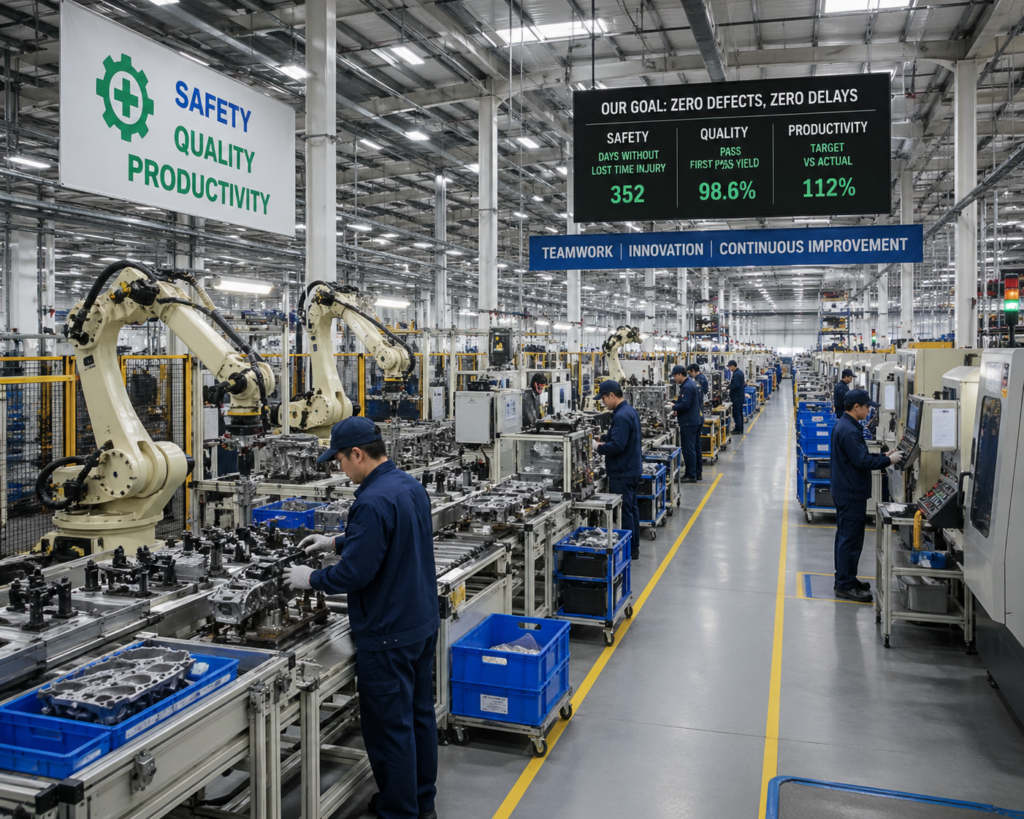
In contrast, those that create transformers, vessels, factories, turbines, robots, cables, pumps and tools were seen as unremarkable.
From a technological perspective, are old business models slow, inefficient, and outdated? Absolutely.
But business models are changing.
New models of capital are democratized and moving extremely fast.
With sophisticated technology and innovative ideas, they are outpacing the old models.
Business and technology are moving faster by the day.
That might be the reason why people have been quick to “redisvert” that the software of an application does not “float” over the internet or mysteriously generate electricity, transport containers, or manufacture semiconductors.
There are many reasons to believe that the digital economy did not succeed the physical economy as people assumed — it simply made the physical economy less painful.
Here are 11 reasons the digital economy is still going strong.
1. AI needs electricity
Although artificial intelligence may seem entirely digital and incorporeal, this is a misconception. The raw materials of our physical world are just as important for the use of AI. In order to process a single query, the following items are consumed and relied on as resources:
- Data centers
- Electrical infrastructure
- Transformers
- Cooling systems
- Semiconductor factories
- Fiber-optic networks
- Backup energy
- Industrial systems
The International Energy Agency estimates that the requirement for electrical energy by data centers grew 17% during the year 2025, and that growth was much faster than the growth of the requirement for electrical energy globally. (IEA)
Though AI exists digitally, its foundation is built materially.
The increased demand for AI means an increased demand for infrastructure.
The development of AI has not made the current industrial economy obsolete. Instead, it has developed a new industrial economy.
2. Supply-chain efficiency is no longer enough
For decades, cost was the main driver behind the design of supply chains.
This meant moving production to the location that was cheapest, keeping minimal inventories, and consolidating suppliers. Every level of the supply chain was optimized to reduce cost.
This worked, until it didn’t.
The pandemic, and a combination of other issues, highlighted the problems caused by concentrating supply chains too much.
Currently, companies and governments are focusing on:
- Reshoring
- Nearshoring
- Friend-shoring
- Strategic Autonomy
- Supply-chain Resilience
The OECD states that as a result of supply chain issues and the need to speed up the digital and clean energy transitions, industrial policy is once again at the center of economic policy making. (OECD)
Not all products will be manufactured at home.
Resilience is of value now.
The cheapest option isn’t the cheapest if it can’t be provided..
3. The energy transition is made of machines
It’s common for people to view energy transitions through an environmental or political lens.
However, first and foremost, it must be viewed through an engineering lens.
The things necessary to make the energy transition happen include:
- Wind turbines
- Nuclear plants
- Batteries
- Transformers
- Cables
- Offshore platforms
- Installation vessels
- Energy storage systems
- Hydrogen equipment
- Grid infrastructure
None of these things can be downloaded.
Steel, composites, gearboxes, and generators are all things needed by a wind turbine, along with some maintenance and a foundation. Ports, cranes, and vessels are needed to create an offshore wind farm as well as project management, subsea cables, and lots of other things.
All of these systems can be optimized with software.
However, systems are still required.
Because of this, the modernization and faster cleaner energy techniques will probably be one of the largest industrial investment cycles the world has ever seen.
4. The electrical grid has become strategic
Electricity networks have long been overlooked due to their reputation of stability.
For various reasons, they’re becoming the most obstructive part of the economy and the most neglected.
Data centers and Electric vehicles require more power and newer transmissions to charge renewable generation. Additionally, factories are shifting to electric power from fossil fuels.
All of this must support the electric grid.
These developments have created a larger demand for:
- control systems
- power electronics
- grid automation
- switchgear
- transformers
- substations
- cables
- control systems
Per the IEA, the expansion of power systems and increased electrification will continue driving electricity demand. (IEA)
A digital economy without sufficient electricity infrastructure is like a sports car without gas.
Looks great, but it isn’t going anywhere.
5. Infrastructure is getting old
No structural system stands the test of time, not even the most advanced systems from the most advanced economic systems. Good cities require good systems to thrive. Lacking adequate systems, cities fall. The physical landscape of the most advanced economies starkly reveals how old they are. As their most advanced systems age, collapsing cities from systems failure demonstrate the advanced economies’ desperate needs for:
- Civil engineering
- Mechanical engineering
- Construction
- Industrial equipment
- Inspection technologies
- Services
- Asset management
To make matters worse, the old cities of these advanced economies lack the good systems that modern digital economies require.
The future of infrastructure is not only about building new assets.
It is also about making old assets smarter.
6. Defence requires industrial capability
Geopolitical tensions have led various nations to boost their defense budgets.
Regardless of your political stance, contemporary defense needs raw industrial resources like:
- Shipbuilding
- Aerospace
- Electronics
- Precision Machining
- Advanced Materials
- Secure Communications
- Systems Integration
It is not possible to create sophisticated aircraft and ships, or sophisticated defense systems through the exclusive craft of constructing software.
Factories, workers (including skilled technicians and engineers), and a sufficient production capacity are vital resources for shipbuilding and other advanced manufacturing industries.
Like many resources for advanced industries, these take decades to develop.
Once lost, skilled workers and factories can’t be developed for these industries again with just a government announcement or a PowerPoint presentation.
This explains the renewed focus on why these industries are strategic vs. commercial.
7. Robots create engineering work
It’s widely believed that robots destroy jobs.
Sure, they can.
However, robots create exponentially more engineering jobs.
Building a robot involves designing, manufacturing, programming, installing, integrating, maintaining, and improving.
Integration and improvement of robots are critical. The robot, in fact, is just one component of the entire system.
It is essential for materials to arrive in the correct condition. Additionally, products should be designed in a manner that supports Automated Handling. Safety Systems need to function, and Quality should be Assured. Operators will require training.
Automation that is implemented poorly runs the risk of having a detrimental effect on a factory.
There are many components that are essential for effective automation including mechanical engineering, controls, software, and sensors, as well as data and process knowledge.
Although Robotics replaces some functions of engineering, it also expands the scope of engineering.
8. AI is better at reports than reality
AI can already write emails, create presentations, summarise documents and generate standard code.
These are important capabilities.
But physical engineering is less forgiving.
A convincing report may still be wrong.
A bridge cannot be approximately safe.
Gravity can’t be ignored by any means of transport.
At the same time, presentation aesthetics can not be the sole reason for ignoring fatigue of turbines.
Real life applications of engineering involve various unpredictable systems like safety, materials, tolerances, weather, and especially human behaviour.
AI will definitely take some of the workload of engineers.
This includes things like calculations, data, generating alternatives and documentation.
However, engineers will be needed to verify whether the results are logical.
The potential victor is most likely not AI or the engineer.
It’s the engineer and AI combined.
9. Mechanical engineering has become digital
Sometimes, mechanical engineering is referred to as a traditional profession. This description is incorrect.
Mechanical engineers today utilize:
- Artificial Intelligence
- Analytics
- Digital Twins
- Robotics
- Simulation
- Industrial IoT
- Predictive Maintenance
- Cloud platforms
- Additive manufacturing
- Embedded software
The machine is now a part of the digital system.
A modern machine of any kind (ship, vehicle, turbine, production line) integrates mechanics, electronics, sensors, software and data.
The mechanical engineer of the future will not become a software engineer.
The future of mechanical engineering will bring the integration of both of these disciplines.
Engineers will now work with both data and engineering, as well as operations and algorithms.
10. Industrial companies have real barriers to entry
This is especially true when comparing developing a digital company with developing an industrial company.
Digital companies can be started much quicker.
Industrial firms face a lot more obstacles.
For a company to make specialized tools for an industry, it may require:
- Years or even decades worth of knowledge in engineering
- Certifications
- Labor with specific skills
- Factories with a certain type of infrastructure
- Supply Chains
- Trust from Customers
- Experience in the Field
- Capability to provide services all over the world
New competitors would struggle to reproduce these assets. This raises economic barriers to entry. Additionally, industrial companies will benefit from:
- long-term contracts
- spare-parts revenue
- maintenance services
- installed equipment bases
- high switching costs
- strong customer relationships
Boring does not inherently mean profitable. Industrial businesses face many risks including:
- cyclicality
- project risk
- commodity prices
- capital intensity
However, businesses with engineering knowledge that is difficult to replicate will have a stronger position and be more defensible than what may appear to the market.
11. Engineering talent is becoming scarce
The final reason is people.
Many experienced engineers and technicians are approaching retirement.
At the same time, demand is growing for skills in:
- Automation
- Electrical engineering
- Robotics
- Manufacturing
- Maintenance
- Energy
- Industrial data
- Systems engineering
The U.S. Bureau of Labor Statistics projects employment of mechanical engineers to grow by approximately 9% between 2024 and 2034. Industrial engineering is projected to grow even faster, at around 11%. (Bureau of Labor Statistics)
The World Economic Forum also lists renewable-energy engineers and environmental engineers among the fastest-growing professional roles. (World Economic Forum)
This does not mean every engineer will automatically have a successful career.
Skills still matter.
Location matters.
Industry cycles matter.
But engineering is not disappearing.
It is evolving.
The strongest career profile will combine:
- Solid engineering fundamentals
- Data literacy
- AI literacy
- Systems thinking
- Communication
- Commercial understanding
The real opportunity is Convergence
Just because boring business is back does not mean we need to go back to old factories. You can’t operate like a dinosaur and expect to win the game. The industrial businesses that will become successful will be the ones that have:
- Great engineering
- Smart software
- Strong AI
- Enhanced operational discipline
- Talented people
- Agility in decision making Business of the past will be the digital businesses of the future.
- No inefficient politics
The digital world is not separated from the physical world. The great opportunity isn’t the new economy against the old economy, it’s the joining of the two
Why the revenge is not guaranteed
A favourable trend does not guarantee business success.
Industrial companies still face:
- High capital requirements
- Economic cycles
- Labour shortages
- Long project durations
- Cost overruns
- Supply-chain disruption
- Poor productivity
- Management complexity
- Old-fashion leadership culture
- Useless politics and game powers
Government subsidies do not automatically create competitive companies.
A large order book does not automatically create profit.
AI does not automatically improve a factory.
Technology cannot compensate for poor execution.
The future may favour industrial companies, but only those capable of converting opportunity into reliable performance.
The world never stopped needing businesses focused on manufacturing.
It just stopped seeing them. They are becoming more evident again.
For many years, we have honored people that develop software for mobile devices.
In contrast, coming years may be dedicated to those that build factories, robots, ships, energy systems and the infrastructure that support those apps.
Where we are going is not a battle of software and rest of engineering.
It is software embedded inside engineering.